Hey there! As an auto parts bearing supplier, I often get asked if there are industry standards for auto parts bearings. Well, the short answer is yes, there are. But let's dig a bit deeper into what these standards mean, why they're crucial, and how they impact both suppliers like me and you, the end - users.
What Are the Industry Standards for Auto Parts Bearings?
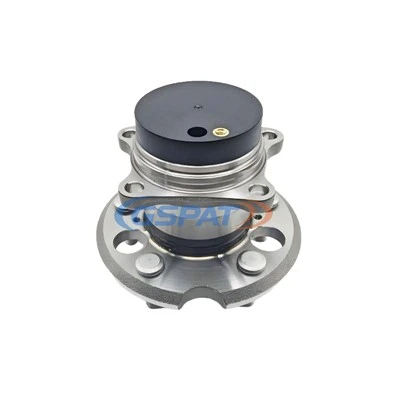
Auto parts bearings are a key component in vehicles. They reduce friction between moving parts, support various loads, and ensure the smooth operation of a car. To make sure these bearings perform well and are safe, several international and national standards have been set.
One of the most well - known standards is from the International Organization for Standardization (ISO). ISO standards cover things like the dimensions, tolerances, and quality control of bearings. For example, ISO 15:1998 specifies the general requirements for the designation system of rolling bearings, so that everyone in the industry can easily understand and communicate about different types of bearings.
Then, there's the American National Standards Institute (ANSI). ANSI standards are widely used in the US auto industry. They set the bar for things like the hardness, surface finish, and material quality of bearings. By following these standards, manufacturers can ensure that their bearings fit properly within a vehicle's system and can handle the stresses they'll face on the road.
In Europe, the German Institute for Standardization (DIN) also plays a big role. DIN standards have a long - standing reputation for being very strict and detailed. They cover aspects such as the design, manufacturing, and testing of auto parts bearings, which helps in maintaining the high - quality standards that European cars are known for.
Why Are These Standards So Important?
First off, safety is a huge factor. When a car is moving at high speeds, the bearings need to work flawlessly. If a bearing fails due to poor quality or incorrect dimensions, it could lead to serious problems like a wheel coming loose or a loss of steering control. Industry standards help prevent these dangerous situations by ensuring that only high - quality bearings make it into vehicles.


Secondly, standards promote interoperability. Different car manufacturers use bearings in various parts of their vehicles. By having common standards, bearings from different suppliers can be used interchangeably in compatible vehicles. This makes it easier for mechanics to repair and replace bearings, and also gives consumers more options when it comes to choosing replacement parts.
Another important aspect is quality control. For suppliers like me, following industry standards is a way to ensure that our products are of consistent quality. We can use these standards as a guide during the manufacturing process, from the selection of raw materials to the final inspection of the finished bearings.
How Do These Standards Affect My Business as a Supplier?
As an auto parts bearing supplier, I have to adhere to these industry standards religiously. It starts with sourcing the right materials. I need to make sure that the steel or other materials used in the bearings meet the specified chemical composition and mechanical properties.
During the manufacturing process, we use advanced machinery and techniques to ensure that the bearings are made to the exact dimensions and tolerances specified by the standards. This involves things like precision grinding and heat treatment to achieve the right hardness and strength.
Quality control is an ongoing process. We have in - house testing facilities where we conduct various tests on the bearings, such as load testing, vibration testing, and durability testing. This helps us identify any potential issues before the bearings leave our factory.
In addition to these technical aspects, meeting industry standards also gives me a competitive edge in the market. Customers are more likely to trust and buy from a supplier who can prove that their products meet international or national standards. It's a sign of reliability and quality.
Examples of Our Bearing Products
We have a wide range of bearing products that are designed to meet various industry standards and fit different vehicle models. For instance, we have the T11 - 3301210AB For Chery Tiggo 2004 - 2016 FWD Rear Hub. This rear hub bearing is specifically designed to fit Chery Tiggo models from 2004 to 2016 with front - wheel - drive. It's made with high - quality materials and manufactured to the strictest industry standards, ensuring a long service life and reliable performance.
Another great product is the T11 - 3301210BC For Chery Tiggo3 2016 - 2021 Rear Hub. This rear hub bearing is tailored for the Chery Tiggo3 models produced between 2016 and 2021. It has been rigorously tested to meet all the relevant industry standards, so you can be confident in its quality.
We also offer the 204000480AA Rear Wheel Bearing Hub Assembly Chery Tiggo 7 2019 Rear. This assembly is a perfect fit for the rear of the Chery Tiggo 7 2019 model. It combines the bearing and hub into one unit, which is convenient for installation and replacement, and it meets all the necessary quality and safety standards.
If you have a CHERY from 2010 - 2014, our 3213667/M11 - 3301210 For CHERY 2010 - 2014 bearing might be just what you need. This product is designed to provide smooth operation and long - term durability, in line with industry requirements.
And for the Chery Tiggo 5X 2017 and later models, we have the T15 - 3301210 Rear Hub For Chery Tiggo 5X 2017 - Rear. It's engineered to meet the specific needs of these vehicles, with high - quality construction and strict adherence to industry standards.
Conclusion and Call to Action
In conclusion, industry standards for auto parts bearings are essential for safety, quality, and interoperability. As a supplier, I'm committed to following these standards to provide you with the best - possible products.
If you're in the market for high - quality auto parts bearings, we'd love to talk to you. Whether you're a car repair shop looking for reliable replacement parts or a distributor wanting to expand your product line, we can offer you a wide range of bearings that meet all the necessary industry standards. Don't hesitate to reach out for more information or to start a procurement discussion.
References
- ISO 15:1998, Rolling bearings - General requirements for designation system
- American National Standards Institute (ANSI) standards related to auto parts bearings
- German Institute for Standardization (DIN) standards for auto parts bearings